
Salts and abrasives: effects on paving and concrete
20 November 2018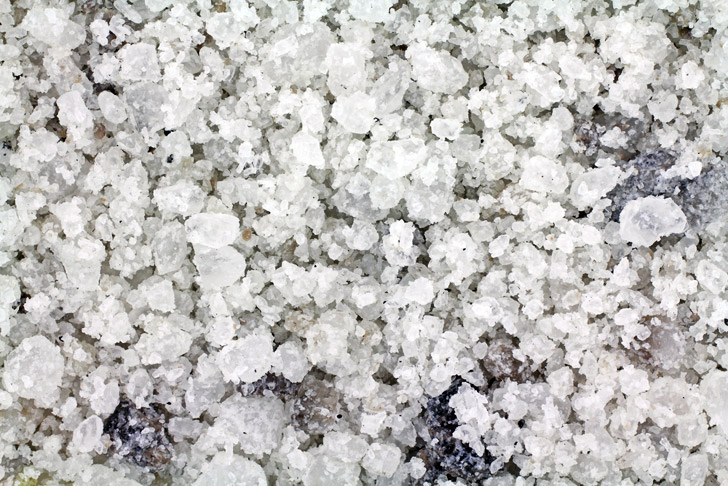
Asphalt and concrete are sensitive to the Quebec climate. Water infiltration, freezing and thawing increase the risk of cracking and deterioration. However, there is another enemy: salt and other abrasives. Indeed, the de-icer is harmful to concrete and cement by creating micro cracks. The water then seeps into them and, under the action of the temperature change, splits the concrete.
A few seasons are enough to completely flake and crumble the material. In addition, de-icing salts not only harm your asphalt and concrete, they increase the salinity of surface water and even harm plants and animals.
It should also be noted that concretes less than two years old react particularly badly to the chlorides contained in de-icing salts. This is why it is important to read the instructions for use of the salts supplied by the manufacturer before applying them to the concrete.
This is an excellent thing, because concrete is made up of cells that absorb some of the water caused by de-icing salts. We could therefore compare the concrete with a full bottle of water placed in the freezer. Concrete may split and the cost of repairing it may be high.
It is therefore essential to use them in moderation. Fortunately, other solutions are also available. The use of sand and gravel, excellent abrasives, will make the surface non-slippery while preventing water from seeping in, as they do not melt the ice.
This is recommended by the Association provinciale des constructeurs d’habitations du Québec (APCHQ). Even though manufacturers promote their ecological formulas, nothing is better than sand and stone. Not only is it a good environmental option, it’s much cheaper!


